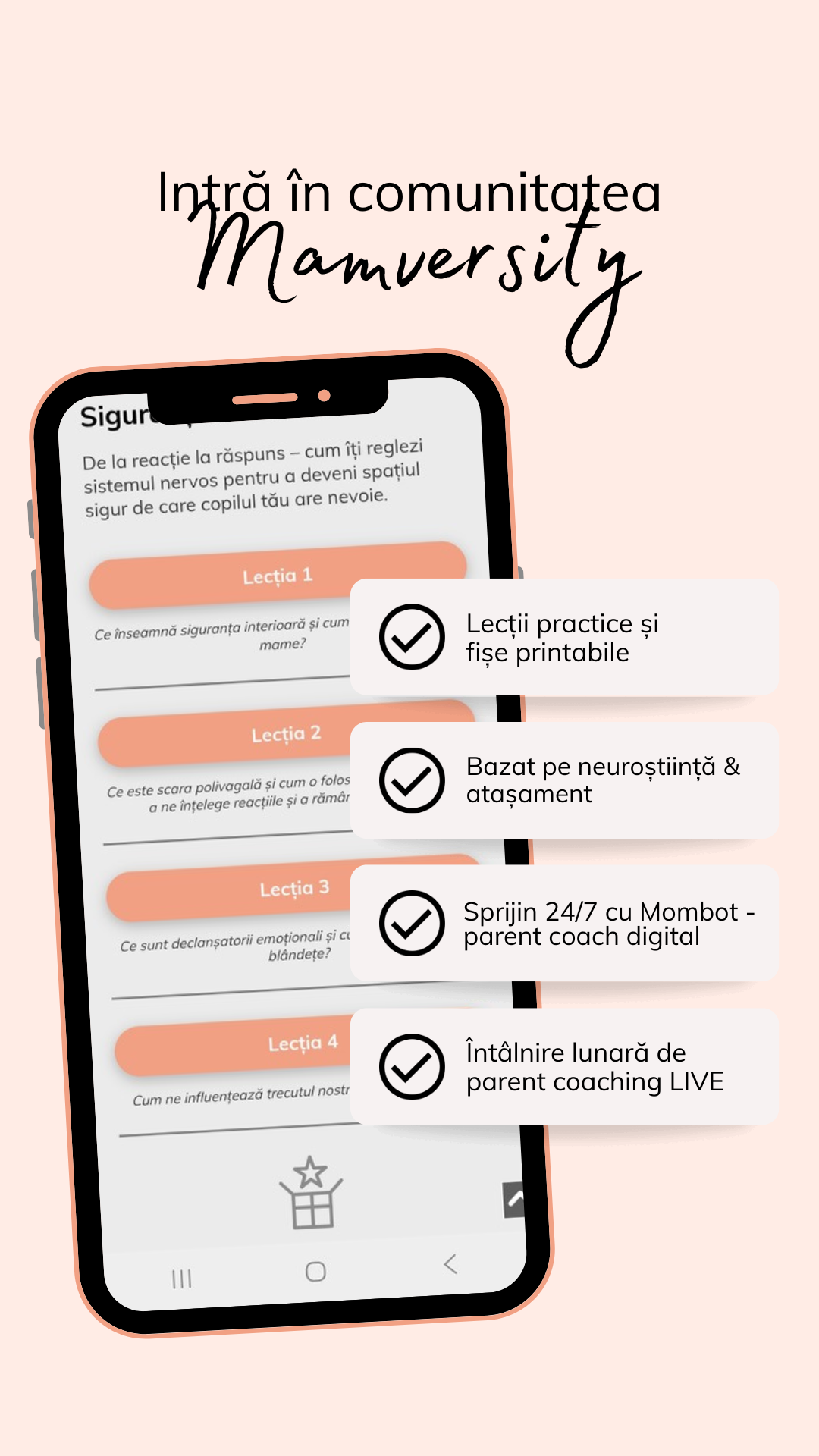
Mamversity - A Nervous-System-Informed Membership for Mothers (with an AI Coach)
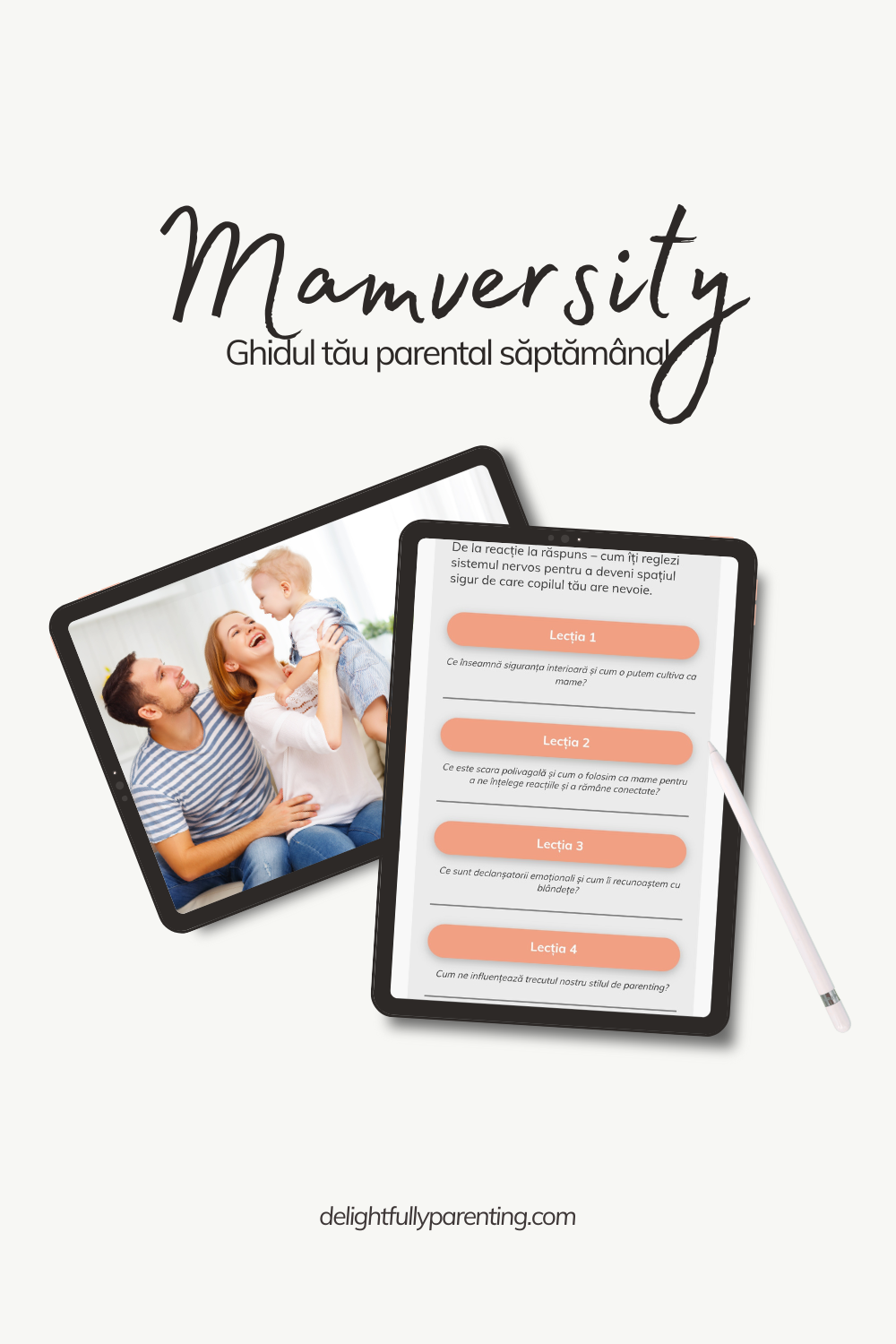
Can a mother learn to regulate her own nervous system before she reacts, not just read about why she should?
Mamversity is an ongoing monthly membership that teaches real nervous-system literacy to a non-clinical audience of mothers, reinforced by a custom AI coaching tool that supports them in the moment a real parenting situation is happening.
Audience: Mothers of young children, ages 0-6, part of the Delightfully Parenting community (25,000+)
My role: Founder and sole designer, in charge with the instructional architecture, masterclass scripting, worksheet and email design and automation, evaluation framework and design of the Parent Coach AI tool
Grounded in: Polyvagal Theory (Porges), attachment and interpersonal neurobiology, reflective/self-compassion practice
Tools & methods: Duda (membership site), Brevo (email sequences), Delphi (AI coach clone), Canva (worksheet and resource design), Loom (video), Google Drive (PDF delivery). Design and evaluation grounded in ADDIE and the Kirkpatrick model.
The Problem
Most parenting content teaches what to do in the moment a child melts down. Very little teaches a parent to recognize and regulate her own nervous system first, even though her own state is what a dysregulated child actually responds to.
The specific learner: a mother who reacts before she can stop herself. She's not looking for another article explaining why she shouldn't yell, she already knows that. She needs to understand why her body reacts faster than her intentions and a concrete, repeatable way to catch herself in the moment it's happening, not just reflect on it afterward.
The business problem underneath it: this had to work as a recurring membership, teaching real nervous-system literacy warmly enough to keep a non-clinical audience returning month after month, not just delivering one strong one-off course.
The Solution & the options I ruled out
I designed Mamversity as a monthly membership curriculum rather than a single course and paired it with a Socratic AI coach rather than a prescriptive one. Both were deliberate choices over alternatives:
- A one-off course was ruled out. A single course delivers one strong first impression and then ends. Nervous-system regulation isn't learned once, it's a practice that has to be reinforced and deepened over time, so the format had to be recurring. Sustaining a returning membership is a harder design problem than a one-time training and it was the right one for the outcome.
- A prescriptive "here's what to do" AI bot was ruled out. The easy build would have been a tool that gives parents a scripted answer. But a scripted answer is something the parent then has to translate into action under stress, exactly when she has the least capacity to. So the coach was designed to use Socratic questioning: it asks the questions that help the parent reason her way to her own response in real time, the way real coaching works.
My Process
I built Month 1 ("Inner Safety") as a deliberate four-week arc, each week building the conceptual and practical foundation for the next:
- Week 1 — Inner safety: Establishes that regulation, not calmness, is the goal — and creates psychological safety for parents who already feel like they're failing.
- Week 2 — The Polyvagal Ladder: Gives parents a simple three-state mental model (connection / fight-or-flight / shutdown) so they can name what's happening in their body without judgment.
- Week 3 — Emotional triggers: Moves from naming states to understanding why specific behaviors set them off, connecting present reactions to earlier experiences.
- Week 4 — Healing old patterns: The most emotionally demanding week — reframing intergenerational patterns not as fixed flaws but as things a parent can consciously interrupt.
Each week follows a consistent three-part structure, so the learner always knows what to expect (predictability lowers cognitive load for an already-stretched audience):
- A masterclass (15–20 min) translating real neuroscience into plain, warm language, always paired with concrete parenting scenarios rather than abstract theory.
- A reflection worksheet for self-paced processing, using open, non-judgmental prompts rather than right/wrong self-assessment.
- A four-part nurture email sequence (Hook → Bridge → Info → Exercise → gentle CTA) that reinforces the same concept between live sessions, so the idea isn't forgotten by the next masterclass.
Sample walkthrough - Week 2: The Polyvagal Ladder
The masterclass opens with a low-stakes scenario: a child spills water on the carpet. It walks through three possible parental responses: calm ("let's clean it up together"), reactive ("you always make a mess!") or shut down (silence, withdrawal) and shows that all three are automatic nervous-system responses, not moral failures.
The worksheet then asks the parent to map her own three states: how each one feels in her body, what thoughts show up, and how she responds to her child from each, building self-awareness through pattern-mapping rather than lecture.
The email reinforces the same model with a fresh, bite-sized entry point: a personal regulation "alarm signal" the parent sets for herself (e.g. "when I feel my shoulders tense, I take three conscious breaths") turning a concept into a habit cue usable in the moment.
The AI intervention - Parent Coach in the Pocket
Engagement surfaced a real barrier: parents were starting the content but not always finishing it and direct feedback showed the issue wasn't content quality, it was time. They needed support in the moment a situation was happening, not a scheduled module to sit through later. That gap led me to build Parent Coach in the Pocket, an AI tool trained on the full course content plus the broader coaching knowledge base, using Socratic questioning rather than flat answers. That single design decision also shifted the measurement question: from "did they complete the module" to "did they apply it" the harder and more meaningful thing to design for.
Results & Evaluation
What I can show:
- 8 of 10 founding members remained in the membership past six months - durable engagement for a recurring product, not a one-off cohort. (A small founding cohort; stated with the denominator visible.)
- Members described the Parent Coach AI as feeling like interacting with a real coach the Socratic design intent landing in practice (self-reported testimonial feedback).
- The curriculum proved durable enough to keep running through at least Month 6, with later months building on the same nervous-system-literacy base.
The program is evaluated using the Kirkpatrick model, all four levels:
- Level 1 (Reaction): Tracked weekly per module: engagement and recurring or clarifying questions to confirm content is landing, not assumed from good feelings alone.
- Level 2 (Learning): Verified through worksheet responses and the personal regulation cue each parent selects, evidence they can name and apply the model, not just recognize it.
- Level 3 (Behavior): The real signal was parents reporting they paused before reacting, used their chosen cue in the moment, and approached their child's behavior with curiosity about the underlying need instead of judgment.
- Level 4 (Results): Tracked at individual level (members returning in later months, confirming the change held) and business level (community growth, repeat engagement, message volume) to verify the approach works at scale.
Takeaways
The honest limitation is measurement depth: retention here is inferred from continued engagement and completed worksheets rather than structured behavioral data and the retention figure reflects a small founding cohort. If I extended this design, the natural next step would be a lightweight way to track which regulation techniques individual parents actually adopt long-term, then moving Level 3 evidence from self-report toward structured behavioral tracking. What I'd carry into any future project: designing for the moment of need, not just the moment of instruction and treating "did they apply it" as the real measure of a learning experience, not "did they finish it."